A watershed isn’t a thing you can point to on a map. It’s the entire upstream system: snowpack, hillside, forest floor, tributary. Together they decide what a river carries.
The river is just the channel.
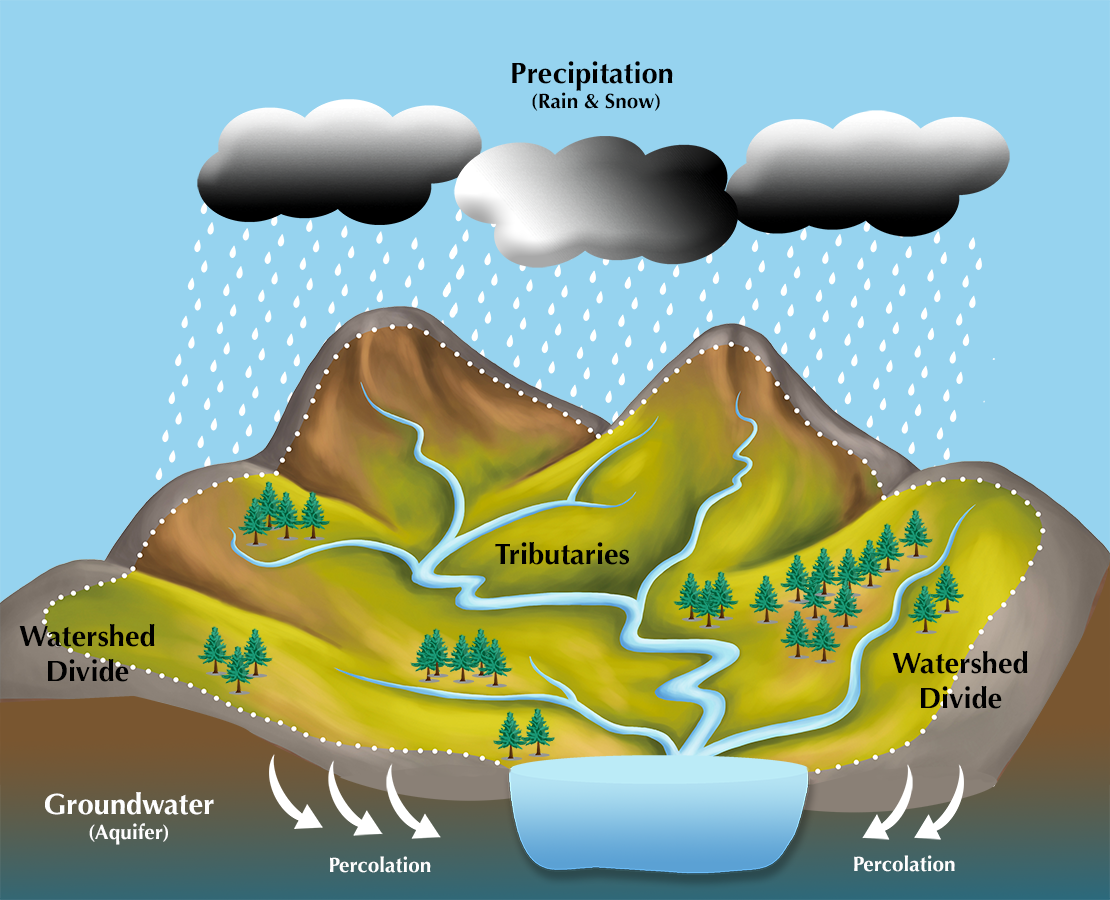
Fundraising has a watershed too. Most of us were taught to look for it in the wrong place.
Where the folklore looks
“Fundraising is about relationships.” We hear it at every conference, and it’s true. A donor who feels heard and respected is more likely to give. They’re more likely to keep talking with us.
But the folklore takes one more step. It treats the fundraiser’s warmth as the watershed, the place trust comes from. Get the relationship right, and the rest will follow.
That step is worth testing.
What the research found
Coaching has studied this question closely. Researchers there call the relationship between coach and client the working alliance.1
Graßmann, Schölmerich, and Schermuly pooled 27 samples covering more than 3,500 coaching engagements. Better relationships went with better results, and the link held steady across the studies. Researchers express that as r = .41.
In simple terms, r is shorthand for how strongly two things move together. Zero means no connection at all. One means they move in perfect lockstep. A .41 is a moderate link: real, and worth taking seriously.2
Then a second study looked closer. Gessnitzer and Kauffeld videotaped 31 real coaching relationships and coded what was actually happening inside them. Bonding behavior on its own did not predict success. What predicted it was the client taking the lead in agreeing on goals and how to reach them. When the coach drove that agreement, results went the other way.3
The relationship mattered. But in that close look, warmth alone was not what made the difference.
Coaching isn’t fundraising. The parallel is an analogy, not proof.4 Still, it points the same way.
“Fundraising is about relationships” is a true observation pointing at the wrong source.
The same structure in fundraising
Warmth matters. It just isn’t the watershed.
The fundraiser is the river. What the river carries is the record: what the organization promised, and whether it kept those promises. That’s the water.
The water comes from upstream. It comes from the whole fundraising system: the program that delivers, the thank-you that arrives on time, the report that tells a donor what their gift did. No single part makes the water. The system does, and it’s more than the sum of its parts.
Consider a donor who feels a strong connection with their fundraiser. Later they discover their gift was misused, their intent ignored, the promised impact never delivered.5 The connection was real. The river ran warm. But it had nothing good to carry.
This is the move the folklore does not make. When we say fundraising is about relationships, we locate trust in the person. That is partly true and dangerously incomplete. Trust is a record of kept promises. The fundraiser carries that record into every conversation, for better or worse. What flows through the conversation depends on everything upstream.
Success in fundraising doesn’t depend on a hero. It depends on what happens upstream.
| The Distinction in Plain Terms | |
|---|---|
| The river | The fundraiser. Carries the record to the donor. Warmth shapes how well it carries. |
| The water | The record. What we promised, and whether we kept it. |
| The watershed | The whole fundraising system. Everything upstream that makes the record. |
What this means in practice
The question “how is my relationship with this donor?” is necessary but not sufficient. The more complete question: what record has this donor seen, and does it match what we promised them?
When a major donor lapses, the failure may not be in the river. It may be upstream, in the organization’s own stated commitments.
Warmth keeps the river running clear. The watershed decides what it carries.
The most valuable thing you can carry into a donor conversation is a clear account of what was promised and what was delivered. That is the receipt. That is what trust is made of.